
Circular Economy

To conserve finite resources, we work to prevent waste generation, improve resource-use efficiency, and promote circular use, and we contribute to building a sustainable society by using lighter weight containers and packaging, and transitioning to environmentally friendly materials.
Targets and Results
Targets:
- Reduce the volume sent for direct incineration and landfill by 50% versus 2019 by 2028.
- Only recycled and plant-based materials will be used for all PET bottles by 2030
FY2024 Results:
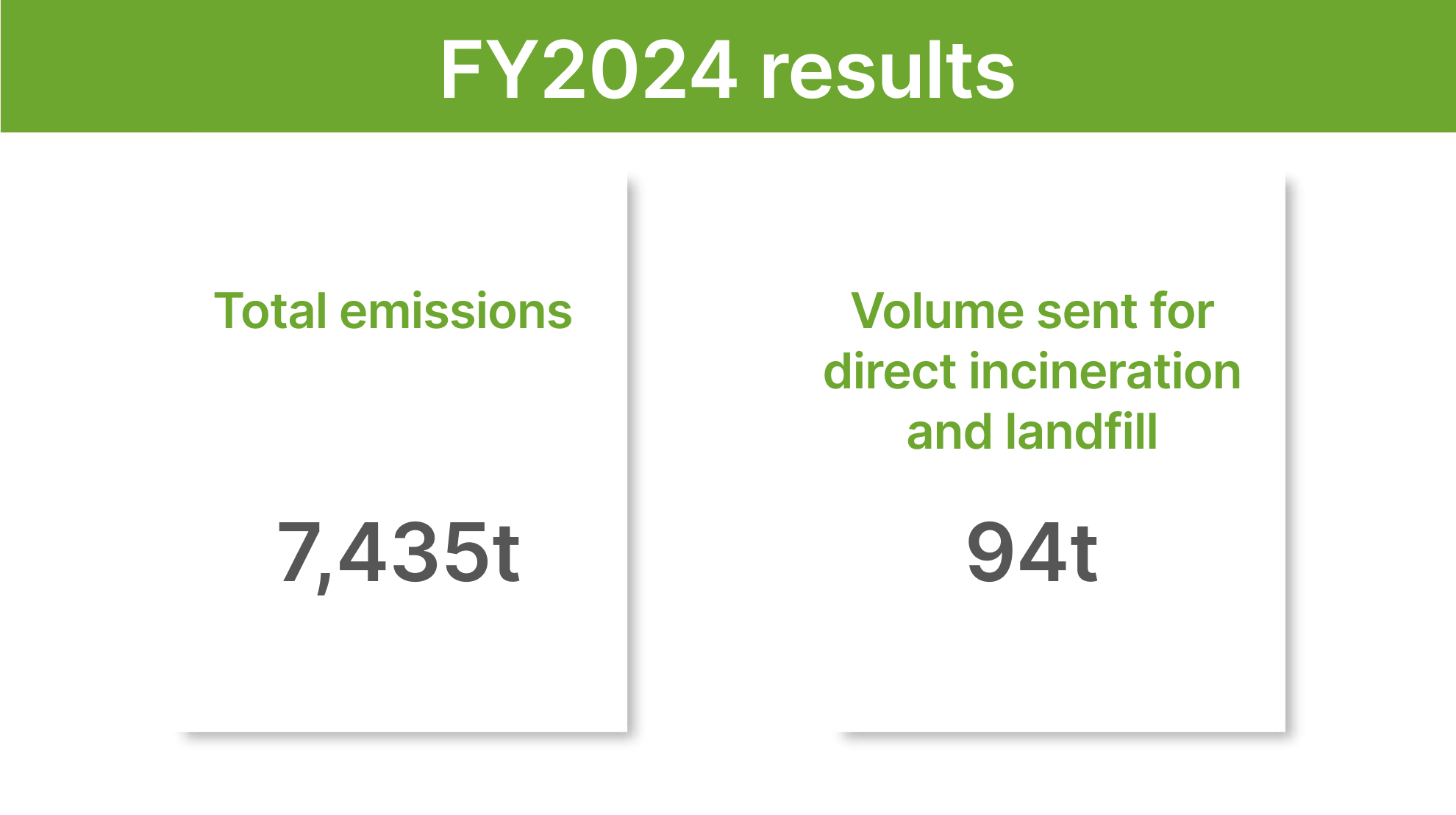
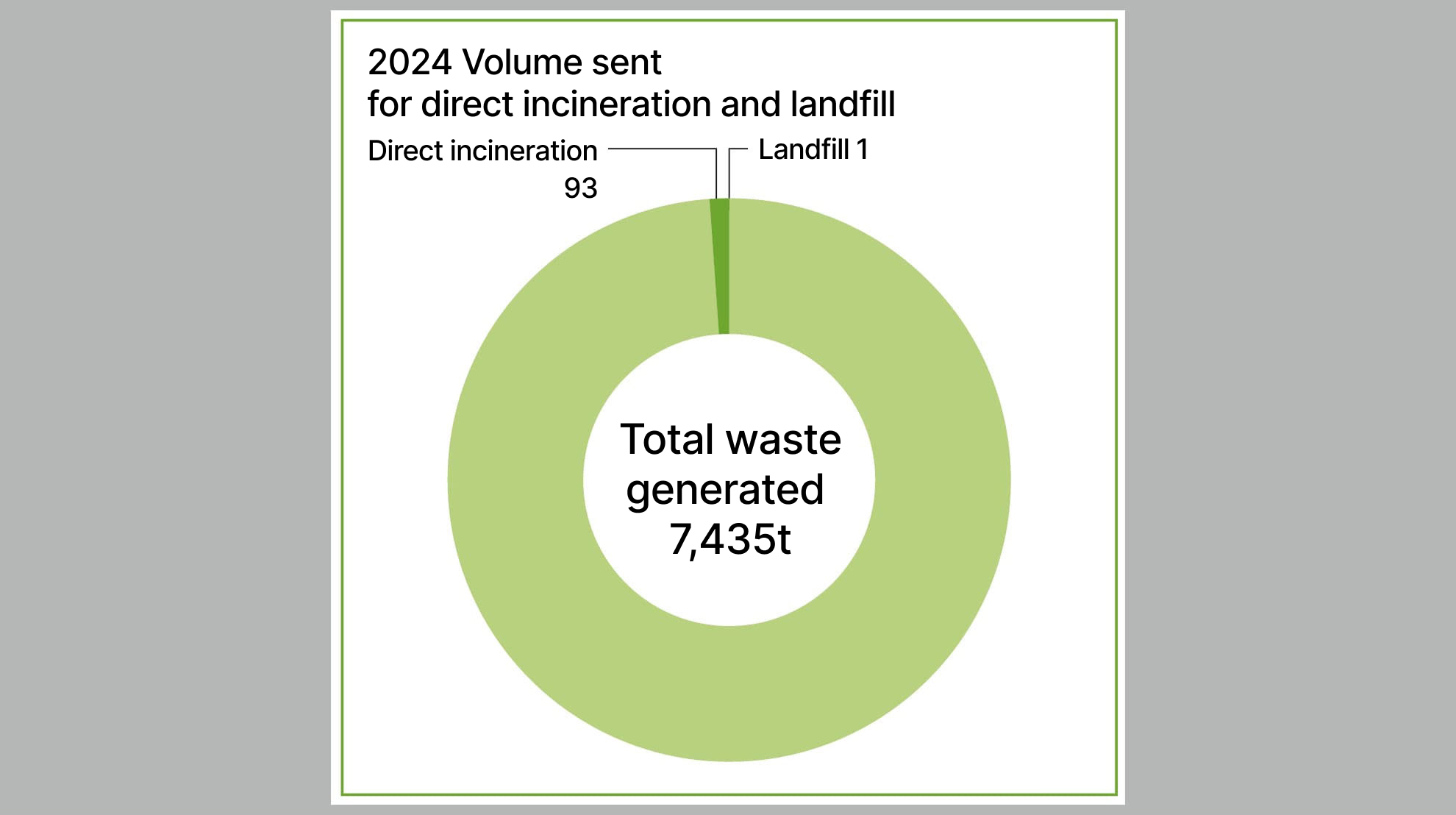
In 2024, the volume sent for direct incineration and landfill was 95 t, and total waste
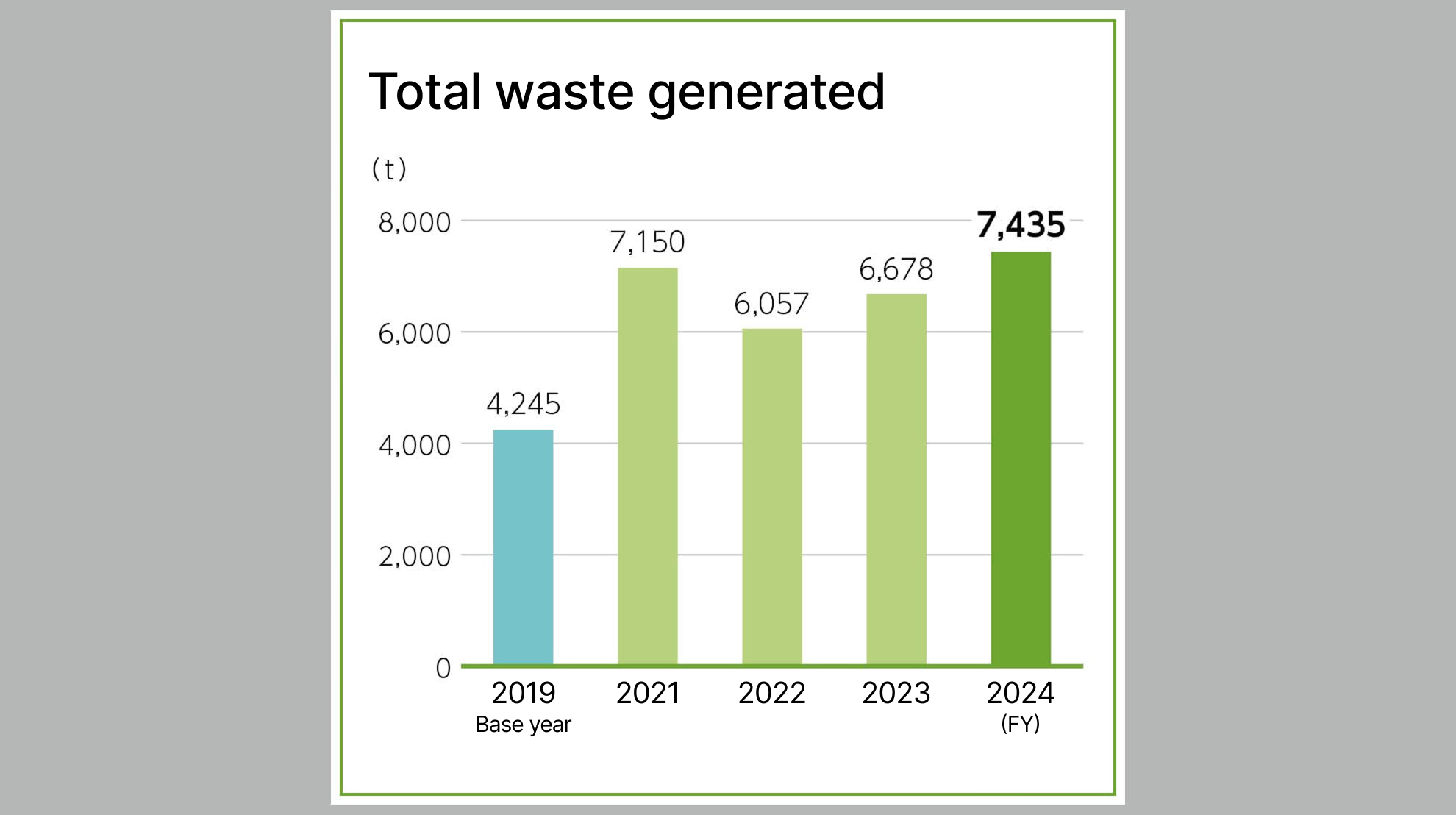
generated was 7,435 t.
While total waste generated increased 11% year over year, the volume sent for direct incineration
and landfill decreased 34% year over year (64% versus the base year).
We will continue company-wide initiatives to reduce waste, such as lowering defect rates.
Development of environmentally friendly products
We strive to practice environmentally conscious manufacturing at every stage, from raw material procurement through to disposal. To reduce environmental impact and improve production processes, we operate environmental management that takes LCA*1 into consideration.
To reduce medical waste, we work to reduce waste starting at the design, development, and manufacturing stages of our products and to minimize environmental impact.
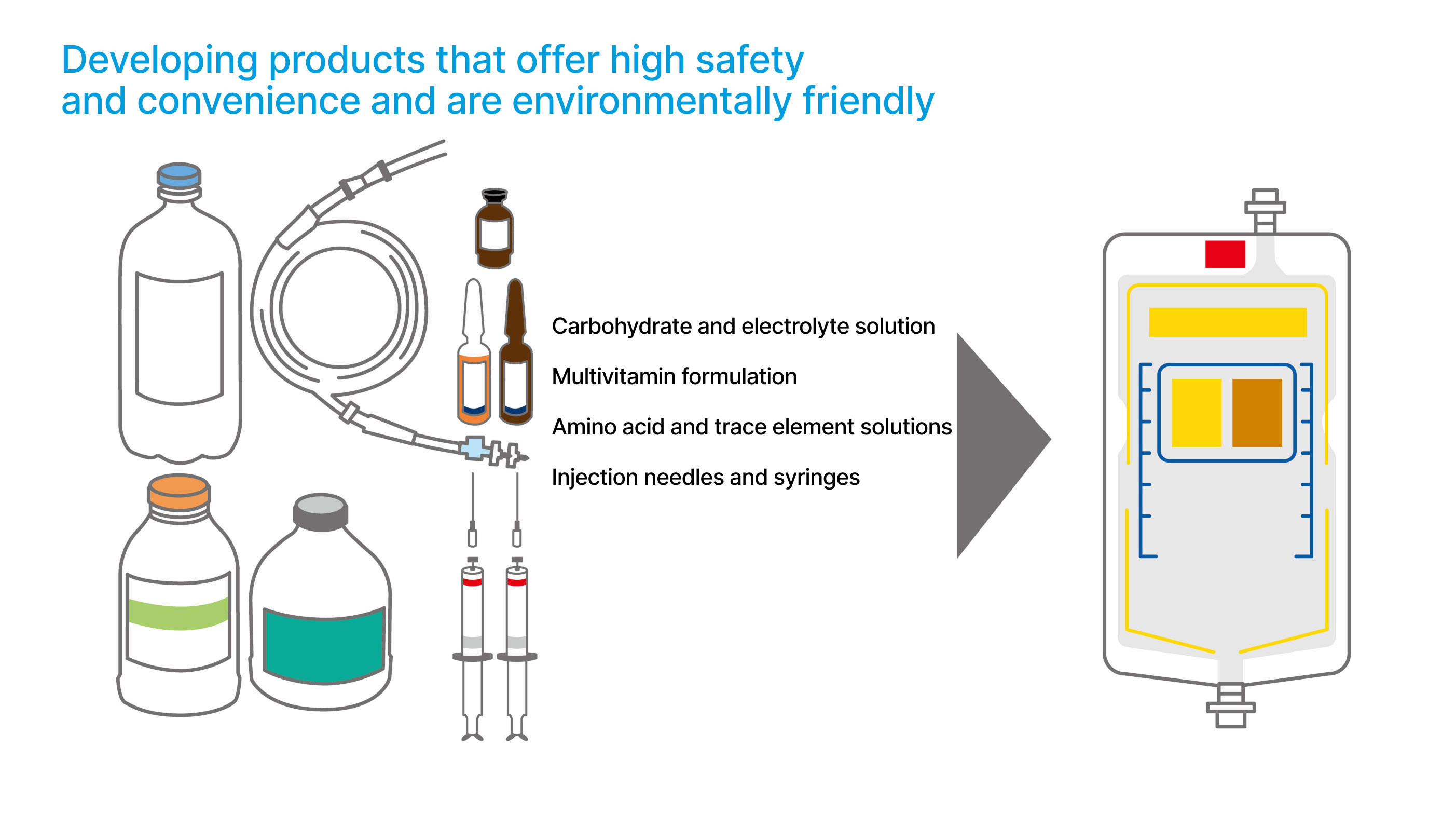
The world's first quad-bag kit formulation (quad-bag), which can be prepared simply by opening the partitions, contributes to improved safety and convenience compared with conventional methods of mixing the individual formulations, and helps reduce environmental impact by cutting down on waste such as drug containers and injection needles.
For injection kit formulations, we made improvements to facilitate sorted disposal by making it easier to separate the container body and the injection needle after use.
For Oronine H Ointment, in August 2015 we launched an 11 g tube that changed the container from an aluminum tube to a laminate tube. Using LCA, we evaluated the environmental impact of container differences (reduction of CO2 emissions).
In addition, for the double-bag formulations manufactured at the new factory since 2020, by changing the thickness of the outer bag and container film compared with previous designs, we reduced weight per bag (500 mL) across the product life cycle by about 34% and CO2 emissions by 38%.
- LCA: Life Cycle Assessment. A method for assessing the environmental impacts of products and services; it quantitatively and objectively evaluates environmental impacts across all stages related to a product, from resource extraction to manufacturing, use, disposal, and transportation.
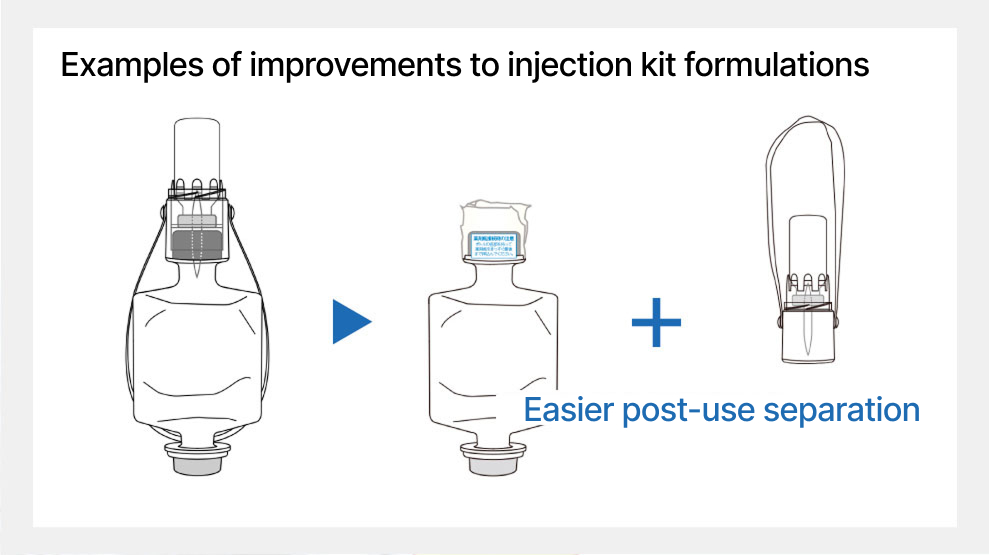
Initiatives to reduce waste
By striving to reduce the waste and production losses generated by our business and
manufacturing activities to near zero in order to slash costs, we aim to become a competitive
company while contributing to the creation of a sustainable society. Our main initiatives
include preventing waste generation, improving resource use efficiency and promoting circular
use, and advancing the use of lighter weight packaging and the transition to environmentally
friendly materials.
As proactive efforts to reduce waste generation, we introduced a high-concentration wastewater treatment
facility at the Toyama Factory in 2018; a crusher (waste plastic washing/dewatering machine) at
the Kushiro Factory in 2022; and food waste processors at the Naruto Factory in 2020 and the Toyama
Factory in 2023, contributing to reductions in waste generation.
Initiatives to reduce food loss
We are working to extend shelf life by reviewing manufacturing methods and other measures. In
June 2019, we extended the shelf life of OS-1 (500 mL), and in February 2024, of OS-1 (300 mL)
and OS-1 Apple Flavor (300 mL), from 12 months to 15 months.
At the employee cafeteria of our Matsushige Factory, we are working to reduce kitchen scraps and
leftovers. Since September 2020, we have reduced annual waste output by about 3 tons, by adopting
demand forecasting of the number of meals to be prepared via a chopsticks survey and changes to
meal service methods. In September 2023, the Naruto Factory employee cafeteria began offering a
collaboration menu with Otsuka Foods: JAVA TEA Tea-Leaf Rice. Tea-leaf rice reuses spent tea leaves
generated when producing JAVA TEA Straight Red, helping to reduce waste (food waste) at the Otsuka
Group.
Initiatives to address plastic issues
We are working toward the sustainable use of plastics and circulation of resources.
In March 2020, the Otsuka Group established the Otsuka Group Plastics Statement to help achieve
a sustainable society, outlining initiatives focused on the PET bottles most frequently used across
group companies. Since March 2024, we have been reducing plastic by switching the six-bottle packaging
for OS-1 (500 mL) and OS-1 Apple Flavor (500 mL) from plastic bags to paper cluster packs.
Otsuka Group Plastics Statement
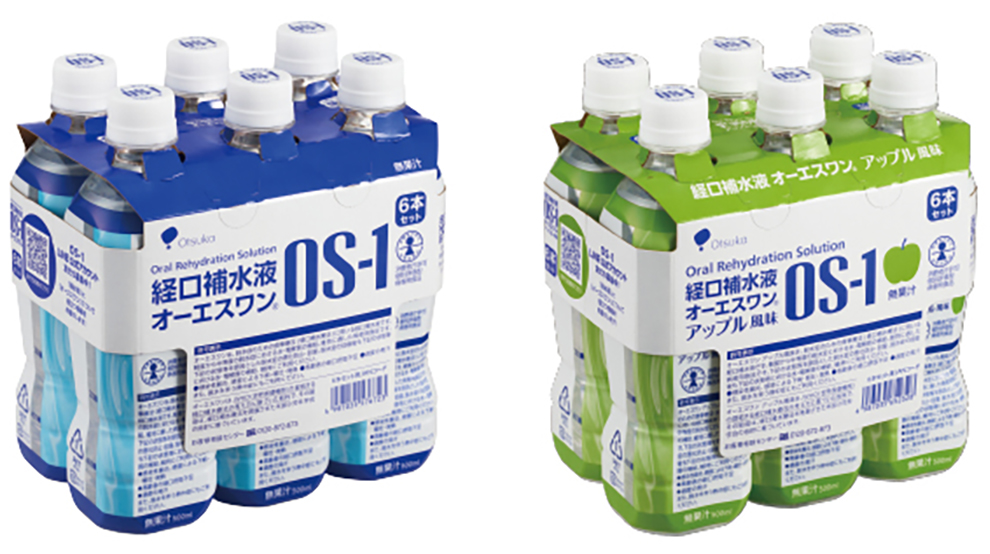
Paper cluster packs