
Risk Management

and Business Continuity Planning (BCP) ISO 22301 certification acquisition Efforts to prepare for natural disasters For stable product supply Collaboration with Local Communities and Governments
Approach to Enterprise Risk Management (ERM)
and Business Continuity Planning (BCP)
We define uncertainties that significantly impact the realization of our corporate philosophy and the achievement of business strategy objectives as “risks.” We are committed to spreading effective risk management activities throughout the organization and aim to become a strong organization capable of responding to changes by engaging in ERM activities and striving to reduce risks. To achieve this, we have established risk management regulations and set up a Risk Management Committee. We are working to build a more robust risk management system from three perspectives: prevention of risks affecting business continuity and stable development (risk management); prevention of damage spread in the event of an incident (crisis management); and business continuity planning (BCP) within risks that have a major impact on business continuity, such as natural disasters and pandemics.
Risk Management Committee

ISO 22301 certification acquisition
Otsuka Holdings Co., Ltd. has acquired the ISO 22301 International Standard for Business Continuity Management Systems, and its scope of application includes the stable supply of IV solutions, which are our main products. The Otsuka Group is striving to create a system and measures that allow us to continue business activities to the fullest possible and provide stable supply of products in the event of a disaster.
Efforts to prepare for natural disasters
Based on the assumption of the tsunami inundation in Tokushima Prefecture, we have taken measures to prevent flooding in the factory, such as building a seawall at the production base in Tokushima Prefecture, where there is concern about the inundation damage caused by the Nankai Trough earthquake. At the Naruto Factory, the seawalls have been built at each production building to reinforce and renovate drainage functions to early eliminate flood damage caused by backflow of river water. The Matsushige Factory has built a seawall around the factory site. The circumferential seawall has drain gates to protect the factory from flooding due to backflow. In addition, as a utility measure, both factories have replaced the industrial water supply pipes with earthquake-resistant NS ductile cast iron pipes.
Installation of a circumferential seawall at the Matsushige Factory
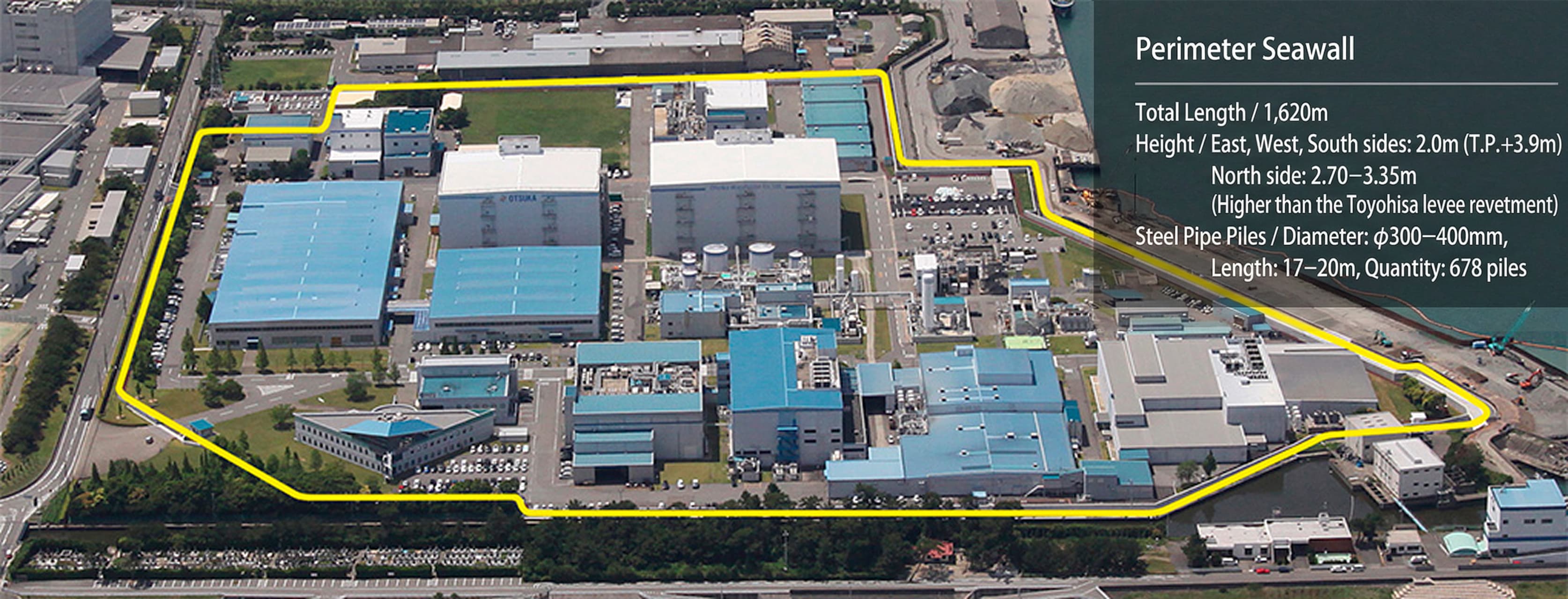
Circumferential seawall
● Total length: 1,620 m ● Height: 2.0 m (T.P. + 3.9 m) on east, west, and south sides; 2.70‒3.35
m on north side
● Installation date: June 2014 ● Steel pipe pile: 300‒400 mm (diameter); 17‒20 m (length);
678 used in total
For stable product supply
IV solutions, Otsuka Pharmaceutical Factory's core products, are essential first aid drugs used in emergencies. As a company with a majority share in the Japanese IV market, we are required to have BCPs in place which will function even when dealing with a major disaster. We never forget this mission, which we are obliged to fulfill as a leading company in IV solutions, and we are sincerely committed to BCP from four different directions: to guarantee the safety of life, to protect corporate assets, to ensure product inventories and raw materials, and to secure distribution channels. Even if some risk becomes apparent, by taking appropriate measures, we minimize damage and loss, continue our business activities, and establish a management system to ensure stable product supply.
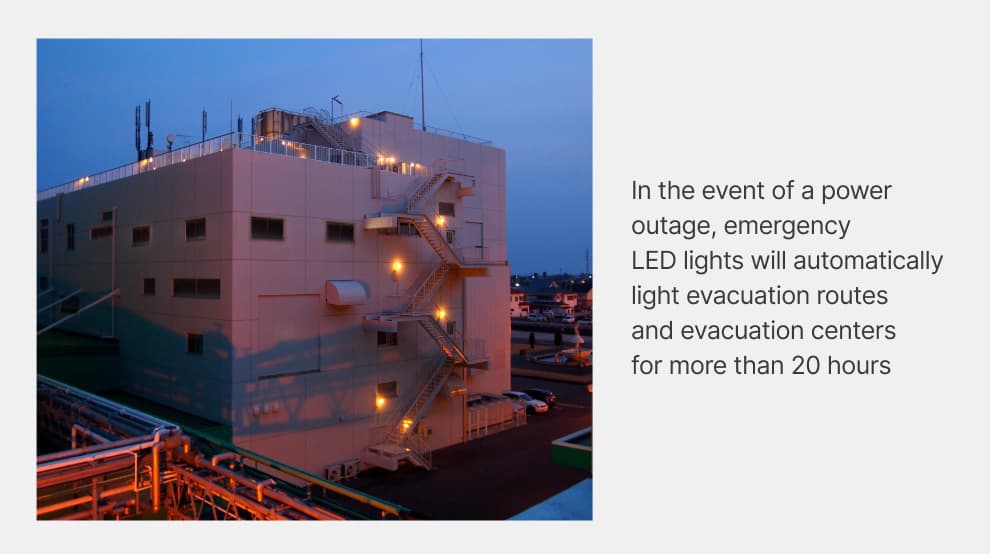
Ensuring safety of life
Ensuring the safety of our employees takes top priority. In addition to ensuring the earthquakeresistant buildings and equipment, installing a device for receiving emergency earthquake warning, and diversifying and multiplexing means of communications, we have in place a safety confirmation system for employees and distribute pocket-sized manuals of useful information for disasters for employees. Additionally all business locations maintain stockpiles of emergency supplies, food, and other goods for survival. We are engaged in disaster drills not only with employees but also with the surrounding residents.
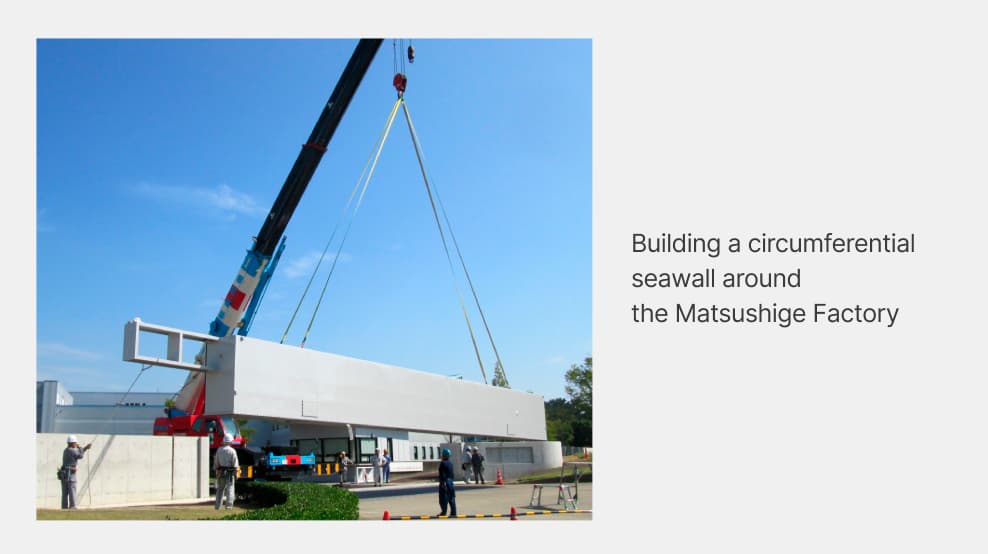
Protection of corporate assets
In order to reduce damage from tsunami inundation and liquefaction caused by large earthquakes, we have conducted aseismic reinforcement of buildings and built a seawall. In addition, we have reinforced the supports for pipe racks to supply energy (electricity, steam, cooling water, etc.) to our manufacturing factories, and have taken measures to reduce damage of inclination of buildings caused by liquefaction. Also, we have built a backup system with multiple data centers so that we can promptly restore data in case important data system is damaged.
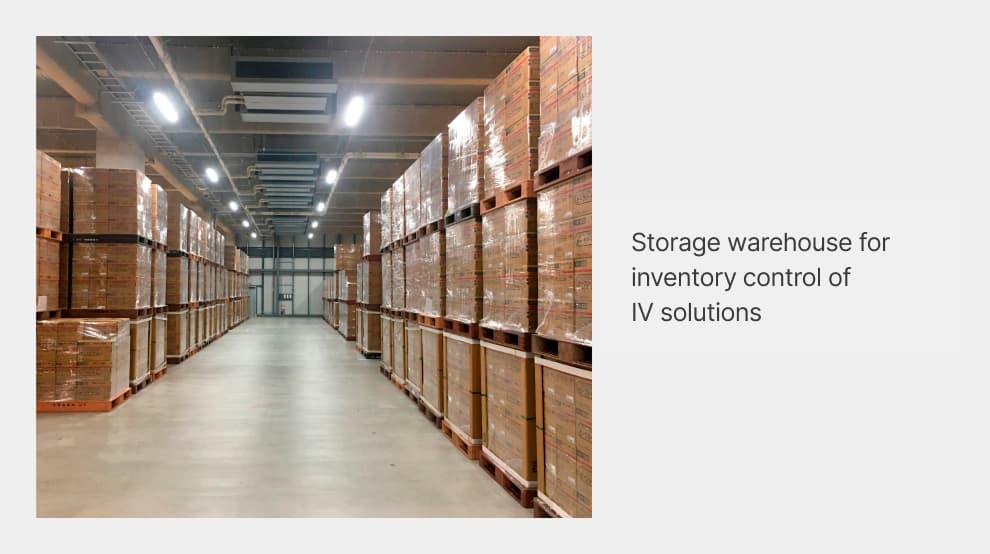
Ensuring inventories of products and raw materials
Considering the situation in which production facilities are subject to a great amount of damage, we ensure sufficient inventories of products that are essential for medical treatment and that have a high market share to prevent shortages. In case of emergency, it is difficult to obtain raw materials; therefore, we are working even in ordinary times to ensure an appropriate inventory of raw materials and purchase from multiple companies in order to detect signs of risks and respond promptly before risks become apparent, so that our products can be supplied stably.
Ensuring means of distribution
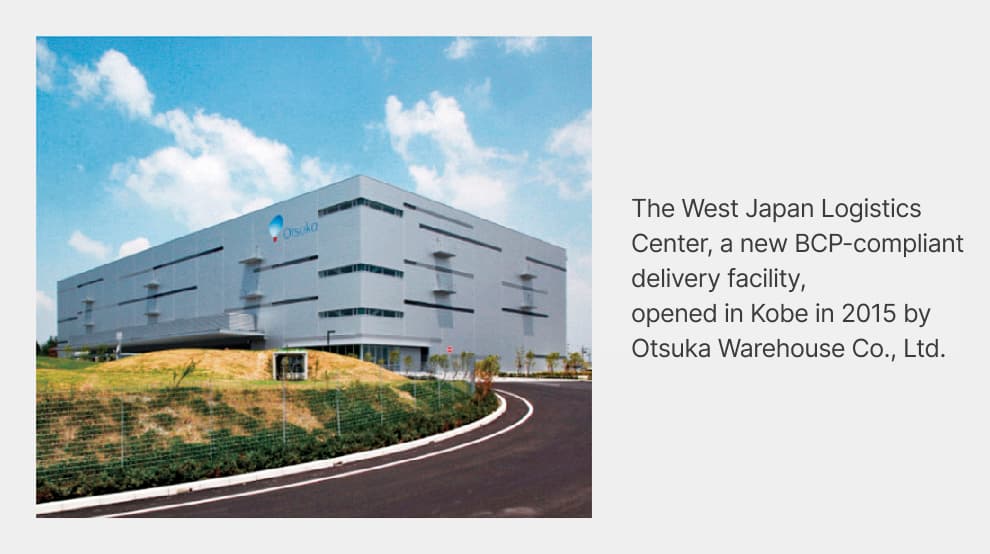
Otsuka Warehouse Co., Ltd. which manages the Otsuka Group’s logistics, has a distribution system considering disaster preparedness, which includes decentralizing its distribution bases and product inventories and building a network, securing new warehousing bases, diversifying its order reception center, and diversifying delivery routes. Utilizing our nationwide network of bases, we have established a system that can promptly provide logistics services in the unlikely event of an emergency.
Collaboration with Local Communities and Governments
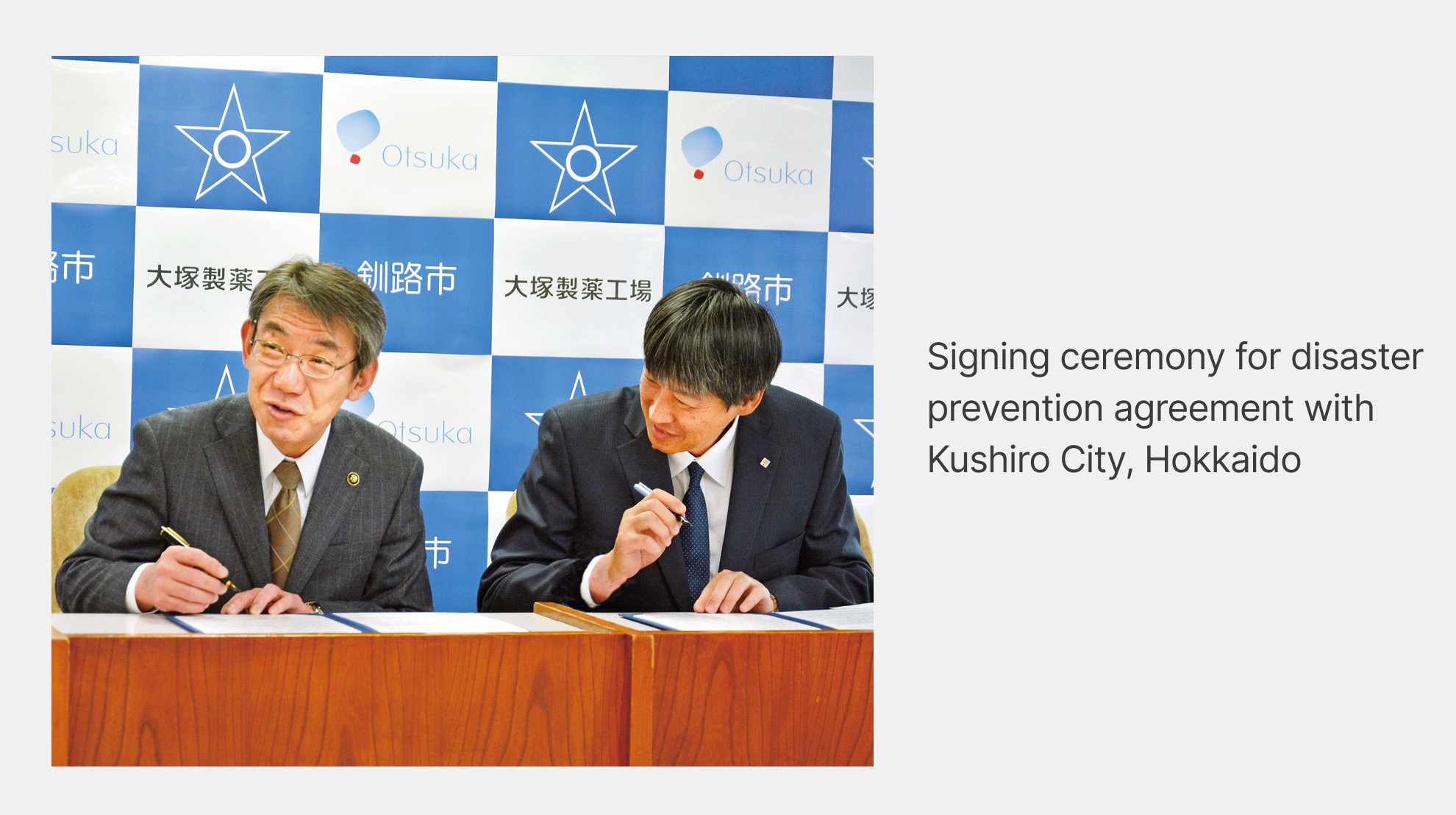
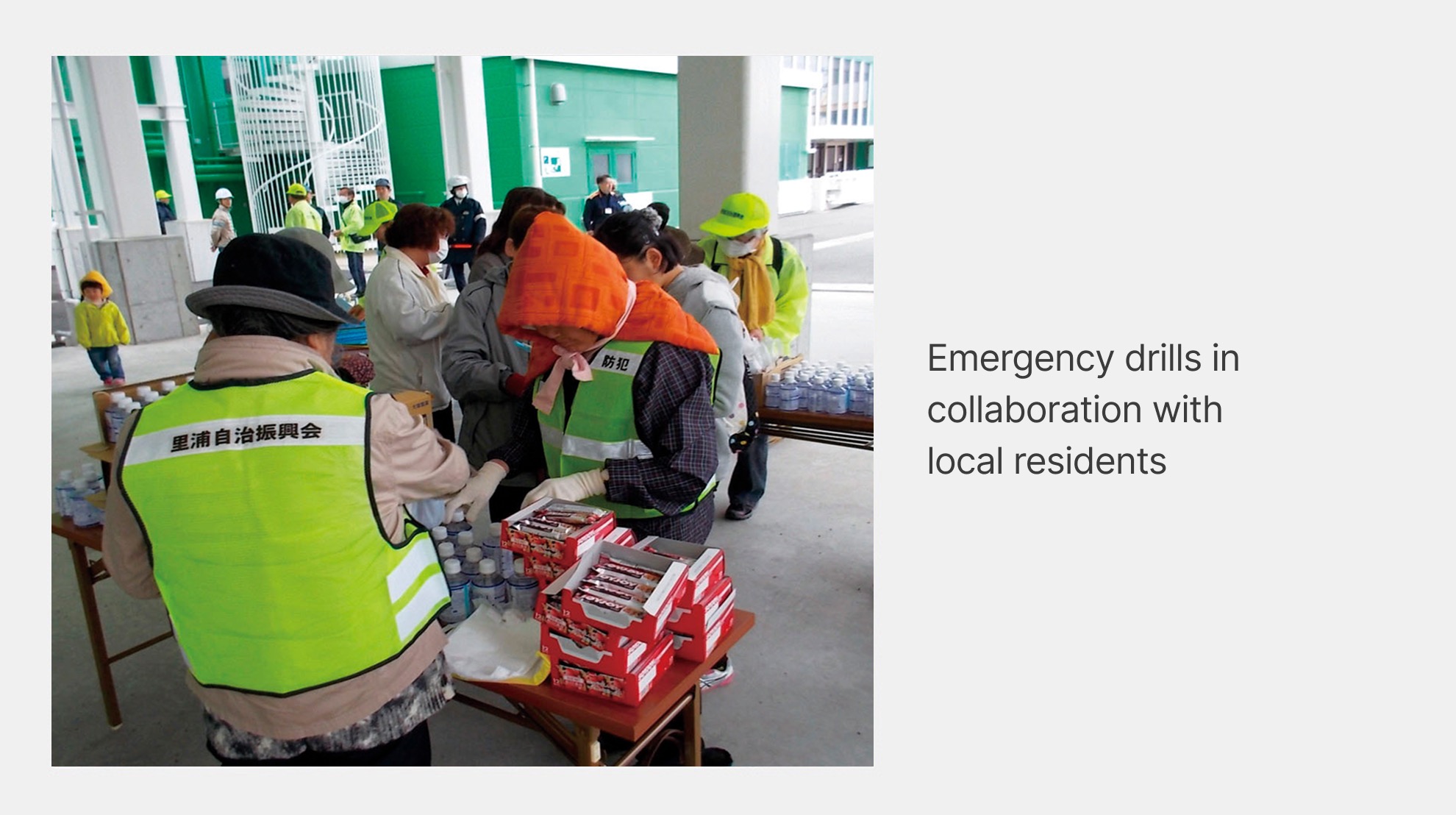
To prepare for disasters, our headquarters and all production sites have concluded disaster prevention agreements with local governments. We conduct briefings on our Business Continuity Plan (BCP) initiatives, facility tours, and joint tsunami evacuation drills for local residents and stakeholders. Additionally, we have entered into comprehensive collaborative agreements with Naruto City in Tokushima Prefecture, Kushiro City in Hokkaido, Ono City in Hyogo Prefecture, Imizu City in Toyama Prefecture, and Kawara Town in Tagawa District, Fukuoka Prefecture. The purpose of these agreements is to establish mutual cooperation between the cities/town and our company to promote activities on nutrition, eating support (frailty, malnutrition, ingesting/ swallowing, oral healthcare, etc.), urination care, and education on heatstroke and dehydration. Through these efforts, we aim to contribute to promoting the health and wellness of citizens, maintaining and enhancing regional medical care, and building a community-based integrated care system, ultimately realizing a society where local residents live in harmony.